August 27, 2010

Amazing surreal stop motion


Accumulonimbus from andy kennedy on Vimeo.

Beautifully fluid surreal stop-motion animation using clay and a window. Check out the making of page to see how much work goes into making something like this!

August 13, 2010

Miff Premiere Fund calls for entries

Press release from Limelight PR

The Melbourne International Film Festival’s MIFF Premiere Fund has today opened its application process for round ten with a call for submissions that closes on Friday 27 August 2010.

Commencing operations in September 2007 with an AUD$800,000 annual grant from the Victorian State Government, the MIFF Premiere Fund provides strategic minority financial supports to a range of local theatrical documentaries and narrative feature films that will have their premieres at MIFF. Round ten of the MIFF Premiere Fund seeks applications from projects that can premiere at the Melbourne International Film Festival in 2011 or 2012. All funding decisions for this latest round will be announced on 6 October 2010.

The MIFF Premiere Fund co-financed this year’s opening night film The Wedding Party, MIFF 2009 opening night film Balibo, and MIFF 2008 opener Not Quite Hollywood. Other MIFF Premiere Fund films at MIFF 2010 included feature films Blame and Matching Jack and documentaries Mother of Rock and Machete Maidens Unleashed! Excitingly both Mother of Rock and Machete Maidens Unleashed! have been selected for September’s Toronto International Film Festival. Previous years MIFF Premiere Fund films include Blessed, The Loved Ones, Rock n Roll Nerd, Celebrity: Dominick Dunne, Bastardy and box office sensation Bran Nue Dae.

MIFF Premiere Fund production financing supports include completion/enhancement loans, mini-gap equity investments and matching marketing/distribution advances. The Fund accepts applications from market-ready feature documentaries and feature drama projects in advanced stages of financing. Submissions must demonstrate that they: have strength of connection to Victoria; can premiere at MIFF; have viable co-financing to enable them to go into production in time for a MIFF premiere; and will benefit in creative, industrial and/or distribution terms from MIFF’s financial backing. For guidelines and application forms, go to www.miffpremierefund.com

In addition to being offered production co-financing, successful applicants to the MIFF Premiere Fund also receive complimentary registration to MIFF 37ºSouth Market, MIFF’s film co-financing market that occurs in the opening weekend of MIFF. MIFF Premiere Fund co-financed titles also receive priority for 37ºSouth: Breakthru Screenings, showcasing films requiring sales and/or distribution to the market’s invited buyers. For more information on MIFF 37ºSouth Market, go to www.miff37degreesSouth.com

August 10, 2010

Hitchcock restoration project

Alfred Hitchcock: pioneer, legend and master of suspense

The BFI National Archive looks after Britain's film heritage. It is the largest and most important film and TV collection in the world.

Curators of the BFI National Archive have identified a collection of films in desperate need of restoration with nine of Alfred Hitchcock's early silent films being the first to seek rescue through the Support the BFI campaign.

Hitchcock's nine surviving silent films are among the most important in cinema history. But decades of wear and tear have left them in urgent need of restoration.

The films:

The Pleasure Garden (1925)
The Lodger (1926)
The Ring (1927)
Downhill (1927)
Easy Virtue (1927)
The Farmers Wife (1927)
Champagne (1928)
The Manxman (1929)
Blackmail (1929)

The BFI needs you to bring these rare films back from the brink and into the digital age.

Every penny counts. So please give whatever you can, and help bring a cinematic masterpiece back to life - for you, for everyone, forever.

Find out how to donate here.

"Before the restoration, Underground was in a bad state with scratches and solarisation running throughout the film and leaving the amazing final chase scene, which I love, all but obliterated. The curators worked on it frame by frame and as the project progressed over the months I was able to come in and watch clips, so I really saw the transformation. After all that painstaking expert work, it was an incredible feeling to be seated at the London Film Festival with hundreds of other people all enjoying that beautifully restored print with its newly written musical score. It's a moment I won't forget".

Simon Hessel, a BFI Patron, supported the restoration of Underground (Dir. Anthony Asquith, 1928)

Spielberg sci-fi series to be filmed in SE Qld

South-east Queensland will be the backdrop for a new Steven Spielberg sci-fi offering about an overpopulated and dying world.

Shooting for Terra Nova is expected to begin in November.

Spielberg and Peter Chernin are on board as executive producers, while Alex Graves (The West Wing, The Fringe and Ally McBeal) and Jon Cassar (24) will direct the 13 one-hour television episodes.

Executive vice-president of production Jim Sharp says Queensland was the best location to portray all possible worlds in the sci-fi series.

"Queensland had the right look, climate and terrain, a vibrant production community and attractive economic incentives," he said.

"We are very excited to be shooting our first production there."

Queensland Premier Anna Bligh says the production will create thousands of jobs and generate more than $50 million in economic activity.

"Fox Broadcasting has today confirmed Queensland as the location of choice for Terra Nova, which comes from the brilliant minds of Steven Spielberg and Peter Chernin," she said.

"As well as showcasing Queensland locations, the series will also reflect the talent of practitioners in the state with 80 per cent of the crew, cast and extras to be Queenslanders."

Screen Queensland CEO Maureen Barron says they worked tirelessly to secure the production.

"Screen Queensland hosted a number of scouts with the producers and worked hard to promote Queensland as the location of choice for the series," Ms Barron said.

- ABC/AAP

August 9, 2010

2010 Tasmanian Music Video Competition

Wide Angle Tasmania invites you to be part of the 2010 Tasmanian Music Video Competition!


All entrants to the competition will be screened on the night, judges will award two prizes, plus there will be a People’s Choice Award that will be decided by audience vote.

One of the judges of this years event will be Josh Logue, acclaimed music video director for bands such as Empire of the Sun, Hilltop Hoods, The Living End and Kisschasy....

First Prize for Best Music Video will receive $500 cash, $500 worth of equipment hire from Wide Angle Tasmania, and a one on one mentoring session from Josh Logue.

Runner Up will also receive a one on one mentoring session with Josh plus $200 worth of equipment hire.

People’s Choice Award will receive $300 worth of equipment hire, plus a one on one mentoring session with Josh Logue.

More info at wideangle.org.au

August 8, 2010

Scott Musgrove

Scott Musgrove - Bete Noire

Audrey Kawasaki

Audrey Kawasaki - My Dishonest Heart
My Dishonest Heart
Audrey Kawasaki - She Who Dares
She Who Dares

Smitten Exhibition Flyer

Smitten Exhibition

Amy Sol

Amy Sol - Peach, Yoshi & Subcon the land of dreams
Peach, Yoshi & Subcon the land of dreams

Kurt Halsey

City SongKurt Halsey - Big trees


Bob Dob


Dob Dob - Shithead

Shithead - by Bob Dob

Edwin Ushiro

Edwin Ushiros solo show in Culver City

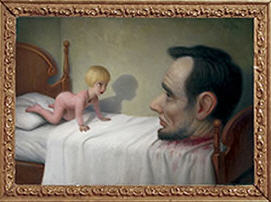
Mark Ryden


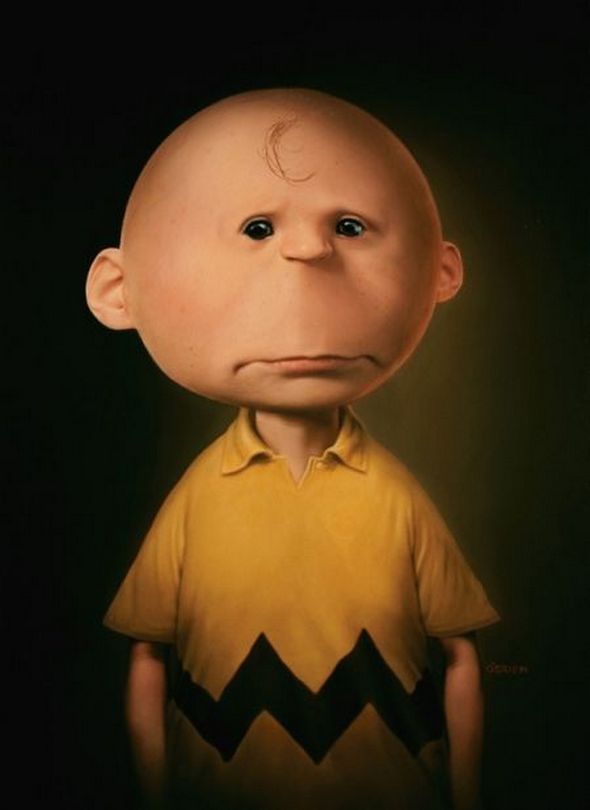
Breakfast: Disgusting

Artist - THOMAS DOYLE

Oz Film Vs Oz Audience


Why don’t the majority of Australian audiences watch Australian films? View the vodcast, listen to the podcast and engage in national dialogue…


On Oct 22, 2009 Metro Screen welcomed a packed house of nearly 400 people at the Chauvel cinema to discuss why the majority of Australians don’t watch Australian films. With only a handful of non-film industry people in the audience [we counted six hands raised in response to this question] this event was somewhat of a watershed moment. We may not have solved the problems but we provoked and pushed the conversation.

Metro Screen will run a series of events in 2010 around the key points raised at the forum [see below] to further explore and articulate the issues facing Australian films.

Also check out the link to the podcast, vodcast and photos. To keep the conversation going online use twitter and the hash tag #OZFILM

KEY POINTS
A) Filmmakers should focus on ‘making our myths’ as well as ‘telling our stories’: the difference is scale, dynamics and ownership.
B) We should debate and resolve the question of a relevant and sustainable benchmark for assessing filmmaking outcomes; we can have both ‘cultural remit’ and ‘box office success’ as measures, but not in a confused blend.
C) The industry to lobby Government to lower the eligibility for the producer offset production rebate below the current level of $1 million to enable emerging, entrepreneurial filmmakers to access support.
D) What does ‘development funding’ really mean? eg from the focus on the ‘draft by draft’ script evaluation through to industry wide strategies.
E) Examine the role of distribution and marketing. Can things be done differently to better connect with target audiences and ensure local films get a better chance not only at the box office but other windows of ongoing exploitation?
F) Embrace the fact that TV, DVDs, online and portable media have an impact on “film”– understand this and capitalise on it.
G) Does “Australian Film” need to be re-branded with its own marketing campaign? A number of countries have come up with practical solutions to build national audiences. Should we do the same for “Australian Film”?

Presented by Metro Screen
Moderator: Andrew Urban- Editor, Urban Cinefile
Introduced by: Liz Watts – Producer, Porchlight Films
Dr Ruth Harley – CEO Screen Australia
Troy Lum – Managing Director of Hopscotch Films
Margaret Pomeranz – At The Movies ABC
Garry Maddox – Journalist, Sydney Morning Herald
Susan Hoerlein – Publicity  Promotions Manager, Tsuki Marketing and PR Agency
Rachel Ward – Actor/Writer/Director – first feature ‘Beautiful Kate’
Antony I. Ginnane – President of SPAA [Screen Producers Association of Australia]


Oz Film Vs Oz Audience 
Oz Film Vs Oz Audience

More Corn, More Hype, More Australiana - By Lynden Barber

Lynden Barber has a solution to the malaise affecting the Australian film industry — and middle class arty types like him aren't gonna like it

The scale of the audience crisis facing Australian films became dramatically clear to me last year when I went with my partner to see a new road movie called Cactus at Sydney's Chauvel cinema. The screening was a depressing experience. Not because of the film, which we both enjoyed. The downer was the fact that our seats were the only ones of the cinema's 365 to be occupied.

This, please note, was not at the end of the film's run or on a quiet, rainy night — it was on the film's opening Sunday, with generally favourable (three and three and a half star) reviews, still fresh in the memory from the weekend's newspapers.

We asked a staff member on the way out what the problem was and if the film had been getting more of an audience in other sessions. His reply: "You're the first people to turn up in three sessions".
A few more people turned out to see some of the year's other Australian films, but hardly in significant numbers. A sign of the low expectations: when commentators brayed about how great it was that the film Unfinished Sky, a well crafted drama about a lonely farmer sheltering an Afghani woman on the run from sex traffickers, had reached the $1 million box office threshold, a modest sum even for a small drama.

Overall Australian produced feature films earned $35.5 million or only 3.8 per cent of the total domestic box office in 2008, a fall from 4 per cent the previous year and below the 10-year average of 4.4 per cent. And most of that sum was taken up by earnings of a single film: Baz Luhrmann's Australia, a US$130 million production bankrolled by Hollywood studio 20th Century Fox and the Australian tax payer, and hyped to be better than the Second Coming.

Since then things have improved — they could hardly have got worse without a total collapse. The global financial crash has seen increased cinema audiences worldwide and a more diverse slate of local films has seen a number hailed as box office successes. These include the Paul Hogan and Shane "Kenny" Jacobson comedy Charlie and Boots ($3.6 million and still going) and to everyone's surprise, Warwick Thornton's small-scale aboriginal dramaSamson & Delilah, which earned nearly $3.17 despite taking an unflinching view of the aimless life of a petrol sniffer on the run from the law.

Last week Mao's Last Dancer, based on the bestselling biography of Chinese expatriate ballet dancer Li Cunxin, brought the strongest news yet for the beleaguered local film industry. It had earned $3.32 million by the end of its opening weekend (once preview screenings were added). As its distributor was quick to point out, the film could also boast the fifth highest ever opening-day earnings for an Australian film — and even though that figure isn't inflation-adjusted, it's still an impressive result. Made for $25 million, the film needs to keep going strongly and do well in overseas markets to have a chance of earning back its production cost, but the result so far augurs well.

Now here's the rub: Mao's Last Dancer is no masterpiece. Though hardly a bad film by any measure, the film has struck several commentators — myself included — as somewhat lackadaisically directed by the veteran Bruce Beresford (who has delivered far stronger work in the past including Breaker Morant). For the first half the film plods on dutifully through Li Cunxin's early life story and arrival in the US, only gaining serious traction as a drama around the mid-way point, when Li decides to defect.

The dance sequences are also curious: Chi Cao, who plays the adult Li, is a superb professional dancer who also acts perfectly adequately. Yet to compare the dance sequences — where a static camera is placed in the audience — with the elaborately photographed choreography of Michael Powell and Emeric Pressburger's classic 1948 ballet film, The Red Shoes, is to get a sense of how great these sequences might have been.

Look at Luhrmann's Australia and the automatic equation of strong box office with quality looks even more suspect. The problem with most Australian discussions of box office is that they've been focussed on how to make "better films", usually by spending more money on script development.

Time to own up: some of the best films don't get the sizeable audiences they deserve (last year's The Black Balloon among them), and many of those that do are mediocre or worse. Due to the policy of "front-end loading" (ie get the audience in quick), major US movies are heavily marketed to the point where they can set turnstiles spinning on opening weekend before the bad word of mouth sets in. The production of rubbish and mediocrity is no impediment to success.

We're quick to recognise Hollywood hits don't always equate to strong filmmaking — so why not with Australian films? Baz's recent camp adventure may have been an artistic failure but it entertained many ordinary Australians. Why? I'd suggest any big budgeter that wallows in Australiana seems to hit an automatic chord. Look at The Man From Snowy River (critics sniffed, the public flocked). Or Crocodile Dundee I and II — the first had charm, the second was lame but that didn't stop it earning a motzah.
Even Strictly Ballroom, which many seem to now accept as a cinematic masterpiece, is not that good a film, I'd argue — energetic and sparkly, sure, but also corny, predictable and let down by a male lead with the acting weight of a sequined cummerbund.

Hit films are not just a luxury but a necessity for any local film industry to prosper - the veteran producer Anthony Buckley likes to say that there's nothing wrong with the local film industry that a hit film couldn't solve. An industry that depends on public funding needs to demonstrate to the politicians and especially the taxpayers that their endeavours are appreciated by the ordinary Joe and Josephine.

This is not just a pragmatic need but I'd suggest a moral duty. No middle class art film lover — and the writer includes himself — should feel complacent about his or her passion for fine local films being kept alive by the drip-feed of tax dollars.

Wearing my critic's hat I almost cringe at what I am about to suggest. But wearing my pragmatist's hat I realise we need more corn, more hype, more Australiana; boatloads of escapism and showbiz; heroic journeys that end in triumph. Audiences want happiness and tears of joy and fear or films based on their favourite book of the past five years. Sometimes this means making films that I and many other critics will consider mediocre or even absolute crap. Let's just stop being embarrassed and hypocritical about it.
Croc Dundee

August 5, 2010

Frozen Cheese: First Arctic Blast reviews hitting the net

Check out the review by John Lampard here.

And an even harsher one from Encore here.

Update: Arctic Blast has been released on DVD to massive critical acclaim (or so). You can buy it from Amazon by clicking on the poster. So go on. Buy it for your mum.